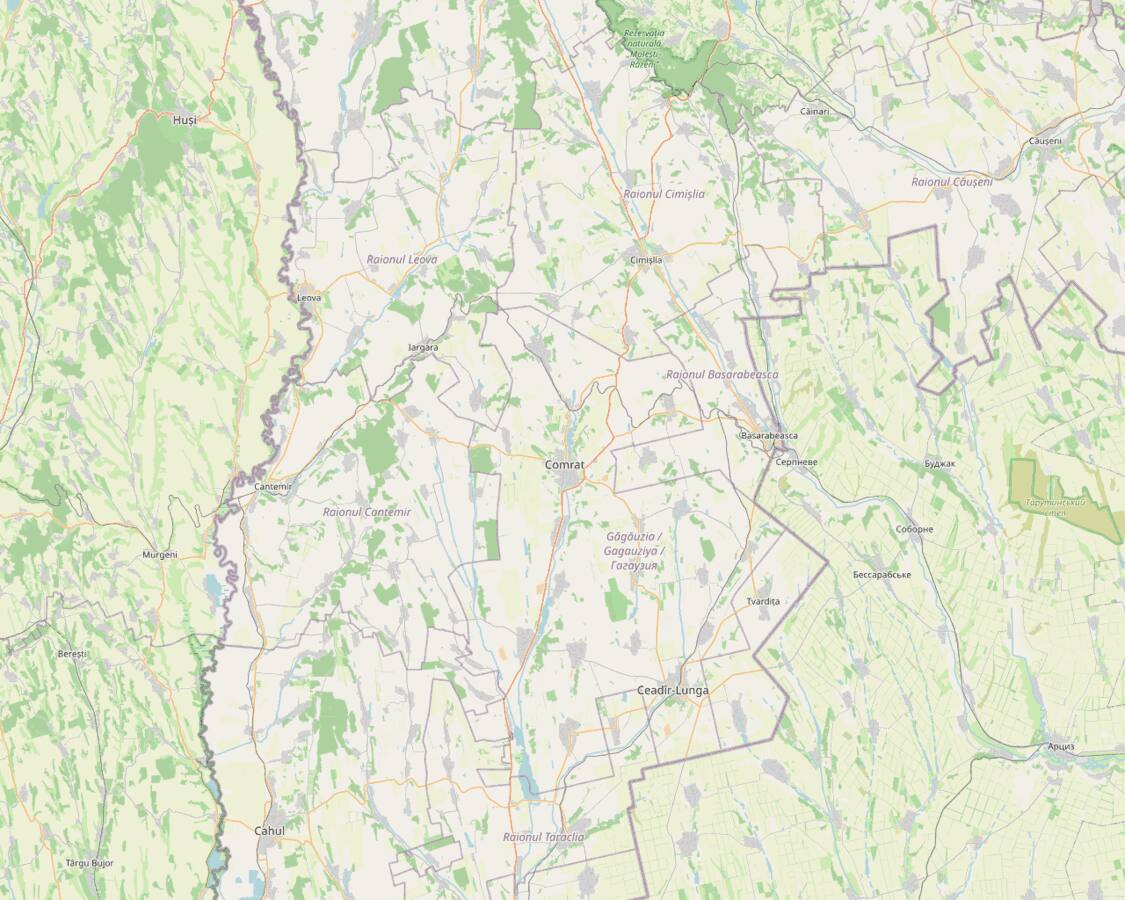
Gagauzia: the Christian-Orthodox Turkic enclave no other country in Europe matches.
An autonomous territorial unit for the Gagauz people — an Oghuz Turkic ethnic group following Eastern Orthodox Christianity, a combination unique in the wider Turkic world. ~160,000 residents across three districts, three official languages (Gagauz, Romanian, Russian), and a calendar that runs from Orthodox Epiphany through the Wolf Festival in November. Comrat is the small capital; the cuisine, the language, and the hospitality are the draws.
Last reviewed: May 2026 · 100 km / ~2 h from Chișinău
The most-accepted hypothesis: the Gagauz descend from nomadic Turkic peoples — Oghuz, Pechenegs, Cumans — who migrated through the Northern Black Sea region into the Balkans. They fled Ottoman religious persecution into Russian-Empire Bessarabia in the late 18th to early 19th centuries; the first formal written reference to the Gagauz as a distinct people is from 1837.
23 December 1994 — Moldovan Parliament passed the "Law on the Special Legal Status of Gagauzia"; effective 14 January 1995. Created the Halk Toplusu legislature, the Bashkan (chief executive, also a deputy PM of Moldova ex officio), and three official languages. The autonomy day, 23 December, is now a Gagauz holiday.
Hospitality customs
Guests are routinely offered house wine, sweet pastries, and a place at the table — refusing is mildly rude; sit, taste, compliment. The phrase Kara Gani's founder uses for visitors — "You come here as a tourist and leave here as a friend" — captures the regional ethos.
Politically: Gagauzia is the most pro-Russian region of Moldova; Turkey has invested in schools, hospitals, and cultural centres (Erdoğan visited in 2018; Turkish consulate opened in Comrat in August 2020). Visitor experience is unaffected. Avoid politics-as-icebreaker; lead with food and wine.
Top sights
Comrat (the capital)
The administrative capital of Gagauzia; population ~23,000; ~100 km / ~2 hours from Chișinău. The bus station, the Lenin statue, the cathedral, and the main park sit within ~500 m of each other on Strada Pobedy + Strada Lenin. Three hours is a comfortable walking tour of the central sights.
Cathedral of St John the Baptist
Comrat's principal Orthodox church; feast day 20 January. Founded by priest Feodosie Marunevici; ornate exterior visible from every angle of the central square. Free entry. Modest dress required (covered shoulders + knees; headscarf for women, available at the door).
Ethnographic + history museums
Comrat Regional History Museum — opened 1969; Soviet-era artifacts mixed with Gagauz ethnographic displays (weapons, photographs, household items, stuffed wildlife). Curated like an attic; one of the region's most popular museums.
National Gagauz Museum of History and Ethnography "D. Cara-Ciobanu" — in Besalma village, ~15 km from Comrat; founded 16 September 1966 by writer Dmitry Cara-Ciobanu; 6,000+ exhibits including original films from the 19th-century Gagauz colonisation of the Budjak steppes.
Mustafa Kemal Atatürk Turkish Library — Comrat's small Turkish-language library, gift of the Turkish government.
Comrat Gagauz Art Gallery — modern works by Gagauz painters and weavers.
Alley of Gagauz Glory + Lenin Monument + Tank Monument — central park, between the cathedral and the bus station.
Kara Gani winery
Family winery in Vulcănești (southernmost Gagauz district, ~2.5–3 h from Chișinău). The Cherven family's wine tradition is documented since 1880; the modern winery launched in 2006. Wine names: Kara = "black" (after the nearby Black Sea / dark vines), Gani = the family surname. Located in the "Valul lui Traian" PGI; warm microclimate, mostly organic grapes.
The Gagauz-cuisine lunch is the draw — kurban (lamb + bulgur), kavarma, gözleme, kivirma, shorpa, plăcinte — and matriarch Larisa Cerven curates a tasting-room museum of antique Gagauz textiles, carpets, wine-bags, and cookware. Typical packaged tour combines Kara Gani with Vinuri de Comrat + lunch — full day with transport from Chișinău.
Gözleme — thin hand-rolled flat pastry, fried on a hot griddle; brânză cheese, spinach, potato, minced meat, or apple. The "business card" of Gagauz cooking.
Kavarma (kaurma) — slow-cooked lamb stew; meat sealed in clay pots with Avassi sheep's fat, aged in a cool cellar; old Bessarabian winter-larder technique.
Shorpa — hearty mutton soup, cousin of Uzbek / Kazakh shurpa; heavier on lamb fat and warming spices. Cold-weather staple.
Kurban — ritually slaughtered lamb baked in a soba oven, served on bulgur or rice; holiday + family-celebration dish.
Bulgur + sarma — bulgur wheat replaces rice in many Gagauz dishes; sarma = grape-leaf or cabbage rolls.
Getting there from Chișinău
Marshrutka
Departs Gara de Sud (Chișinău Southern Bus Station), Stand 16 — NOT Gara Centrală or Gara de Nord.
Ticket booth ~2 m from the platform; card payment accepted.
67–70 MDL (~€3.50); ~1 h 20 min to 2 h 30 min depending on traffic.
Hourly cadence from ~06:00; last return marshrutka ~19:00.
Arrives Comrat Bus Station (Strada Victoriei 2) — short walk to central park + Lenin Street.
No border / no passport check — Gagauzia is part of Moldova proper.
Drive + organised tour
~100 km via M3 to Comrat (~2 h).
Continuing to Vulcănești (Kara Gani) is another ~80 km via R34 / M3 — total ~3 h from Chișinău.
Day-tour operators package Comrat + Besalma museum + Kara Gani + Vinuri de Comrat as ~10–12 h trips with English-speaking guides — Solei Tourism, Tatrabis, GetYourGuide, Winerist.
Language basics
What you'll hear
Russian dominates daily commerce and signage.
Gagauz — heritage language: Turkic, Oghuz branch (close to Turkish + Azerbaijani); written in Cyrillic in Moldova.
Romanian / Moldovan is the third official language but rare in everyday Gagauz speech — most Gagauz speak only Russian + Gagauz.
English coverage thin outside hotel + winery staff; carry a translation app.
Survival phrases
Здравствуйте (Zdravstvuyte)
Hello — Russian, neutral.
Saalıcakla
Hello — Gagauz, casual greeting in villages.
Sağ olunuz
Thank you — Gagauz.
İiy gelmenizi
Welcome — Gagauz.
A polite handshake + visible attempt at Gagauz greetings opens doors.
Where to eat
Kara Gani winery restaurant — the best place in southern Moldova to eat full-tilt Gagauz cuisine paired with the family's wines.
Vinuri de Comrat — sister stop for tastings + locally sourced lunch in Comrat itself.
Café Marusya + town-centre cafés in Comrat — shorpa, kavarma, gözleme; staff usually Russian-speaking.
Comrat central market for self-caterers — sheep cheese, kavarma in clay pots, kivirma, house wine in plastic bottles.
Where to stay
Komrat City Hotel — small modern hotel in the centre; standard rooms, breakfast included.
Hotel Manas — mid-range, restaurant on-site.
Kara Gani winery rooms — guesthouse-style overnight available for tour groups by arrangement.
Day-trip is the default — Chișinău-based travellers typically do Comrat in ~10 hours round-trip. Overnight only if continuing to the south wine route or Cahul.
Annual festivals
Hederlez · 5–6 May (main day 6 May) — Gagauz spring renewal festival, anchored in Ceadîr-Lunga (AT-Prolin horse farm); folk dance, music, lamb feasts; rooted in pre-Christian pastoral traditions but absorbed into Orthodox May celebrations.
Wolf Festival · mid-November — Dzhanavar Yortulari. Avoid sewing wool, bake ritual flatbreads with holes, smear oven doors with clay to "blind" wolves and protect livestock. Quietly observed in villages.
Autonomy Day · 23 December — anniversary of the 1994 Special Legal Status law; concerts + flag-raising in Comrat.
Gagauz Şarap Yortusu (Wine Festival) · first Sunday of November — Comrat (and smaller editions in Vulcănești); live music, communal grape-press demonstrations, wine sales. 2026 falls on 1 November.
Cathedral Day · 20 January — Comrat cathedral feast; small religious + civic procession.
No — autonomous territorial unit within Moldova. No border, no passport check, no separate currency.
What's the relationship with Turkey?+
Cultural + linguistic kin — Turkey funds schools, hospitals, libraries; a Turkish consulate opened in Comrat in 2020. Locally Gagauz identity is Christian Orthodox + Turkic.
What language should I greet people in?+
Russian is the safe default. Try a Gagauz hello (Saalıcakla) at the winery — it wins smiles.
Day trip or overnight?+
Day-trip from Chișinău works — three hours in Comrat + lunch + return is ~10 hours round. Overnight only if pairing with Kara Gani in Vulcănești or continuing to Cahul.
Best month to visit?+
May–October. May = Hederlez festival + spring lamb; September–October = vintage + harvest meals.
Is it expensive?+
Cheapest region in Moldova alongside the north. A full day with marshrutka + museum entries + lunch ≈ €15.